11.09.2026
If you’ve ever looked at an email from Students Demand Action asking you to join a phonebank or canvass for Gun Sense Candidates and thought, “Wow, I could never do that,” trust us — we get it! Knocking on strangers’ doors or calling through a list of numbers to talk to them about a candidate’s position on gun safety might feel intimidating. That’s especially true when, as is the case for many of our Students Demand Action volunteers, it’s only their first or second time going through an election cycle!
That’s why Students Demand Action launched our Electoral Impact Intensive in Summer 2026. We wanted students to grow as communicators and organizers to impact the long-term strategy of gun safety advocacy. And, more importantly, we wanted to support students every step of the way as they learned new skills and applied them to their get out the vote efforts.
Many of the 13 all-star Students Demand Action volunteers who completed the first cycle of the Electoral Impact Intensive shared common fears around election work. Students were nervous about people being hostile or rude during phone calls or conversations at doors. They weren’t sure how they would balance the increasing demands of a school semester with the intensity of election work. But our all-star students kept showing up alongside hundreds of others across the country — and together, they helped us reach 1.3 million voter contacts and counting in 2026 alone!
We asked our first cohort of Electoral Impact Intensive students about why they got involved in get out the vote efforts, what they learned throughout the program, and what advice they’d give to students like them looking to plug into election work.
Responses have been edited for length and clarity.
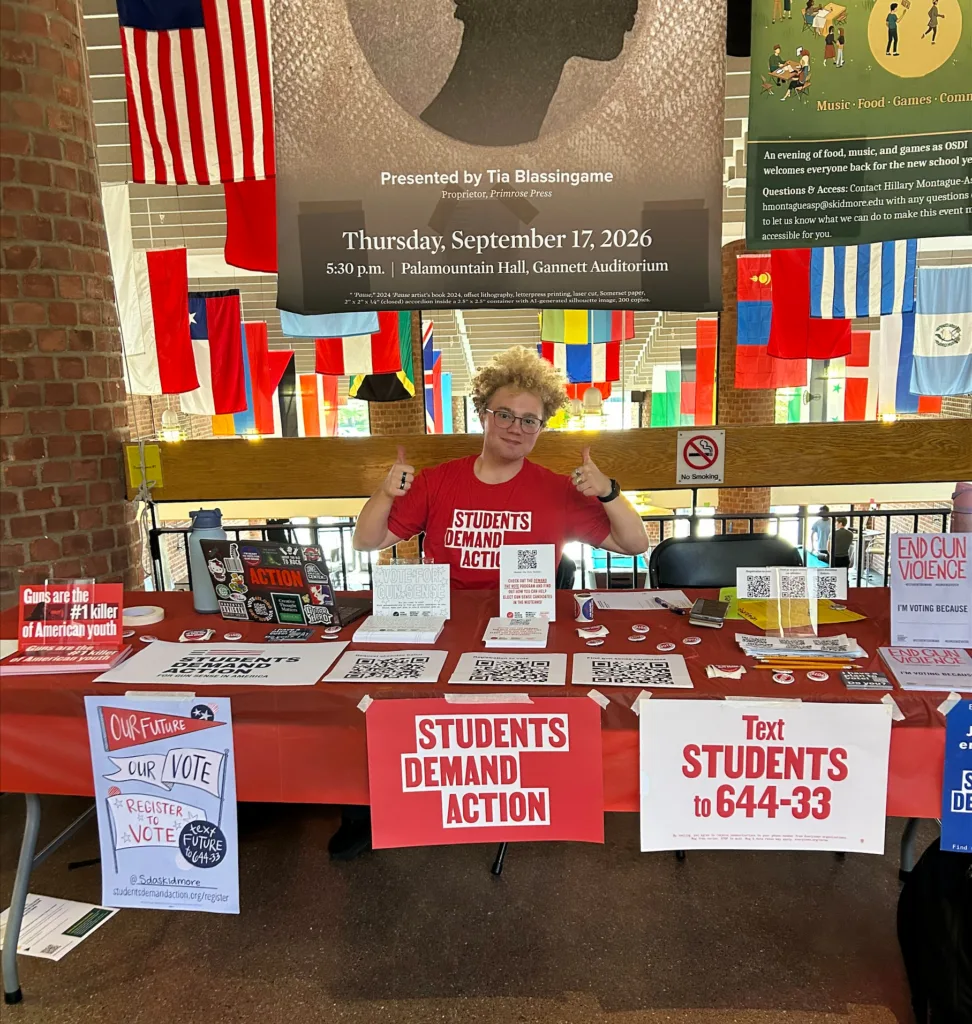
Why was it so important to you to get involved with election work?
Mya N., Ohio: Elections matter to me because, as a teenage girl with strict parents, I want to increase the safety of our communities so our loved ones don’t have to worry all the time. From the local to the national level, elections play a tremendous role in our lives and must be taken seriously. However, voter turnout in U.S. midterm elections remains significantly lower than in presidential elections, which reflects how many people underestimate the impact of local and congressional races.
Vivienne H., New York: Elections matter to me because they directly impact the policies and leaders that shape our everyday lives. Issues like gun violence prevention, school safety, and youth advocacy are deeply connected to the outcomes of elections. I believe many young people underestimate the power of their voices, and I want to help change that by encouraging civic participation and showing students that they can make a real difference. To me, elections are not just about politics: they are about creating safer communities and ensuring that people, especially young people, are represented and heard.
Avery S., South Carolina: Elections matter to me because I have seen firsthand what happens when power gets into the hands of the wrong people, and I truly believe that situations like that are completely preventable. I’ve seen programs that help underprivileged communities get stripped away just because a specific candidate was elected governor in my state, and I’ve had to watch those communities and those people suffer. Elections are an opportunity for our right to democracy to be exercised, and they are an opportunity for our voices to be heard. If we don’t act on these opportunities, then we are doing a great disservice to ourselves and all the people who don’t have the privilege to advocate for themselves.
Sam S., Pennsylvania: Elections are so important to me because they are a critical part of a functioning democracy. Without fair and free elections, our power as citizens would cease to exist. [As a transgender and gay male,] elections are the deciding factor of whether or not I will be protected and supported within my identity. Additionally, I have close friends who have been victims/witnesses of gun violence, and elections allow us as a community to have our voice be heard as we demand change regarding gun laws.
Barbara S. L., North Carolina: I have seen firsthand how policy decisions impact people’s daily lives. As the daughter of an immigrant mother and someone who has worked closely with underserved communities, I understand that many individuals are affected by decisions made by elected officials, whether they realize it or not. Elections determine who will advocate for issues such as education, healthcare, economic opportunity, and equal access to resources. For me, voting is more than a civic responsibility; it is a way to ensure that communities like mine are represented and heard. Meaningful change begins when people engage in the democratic process, and elections provide one of the most powerful opportunities to shape the future we want to see.
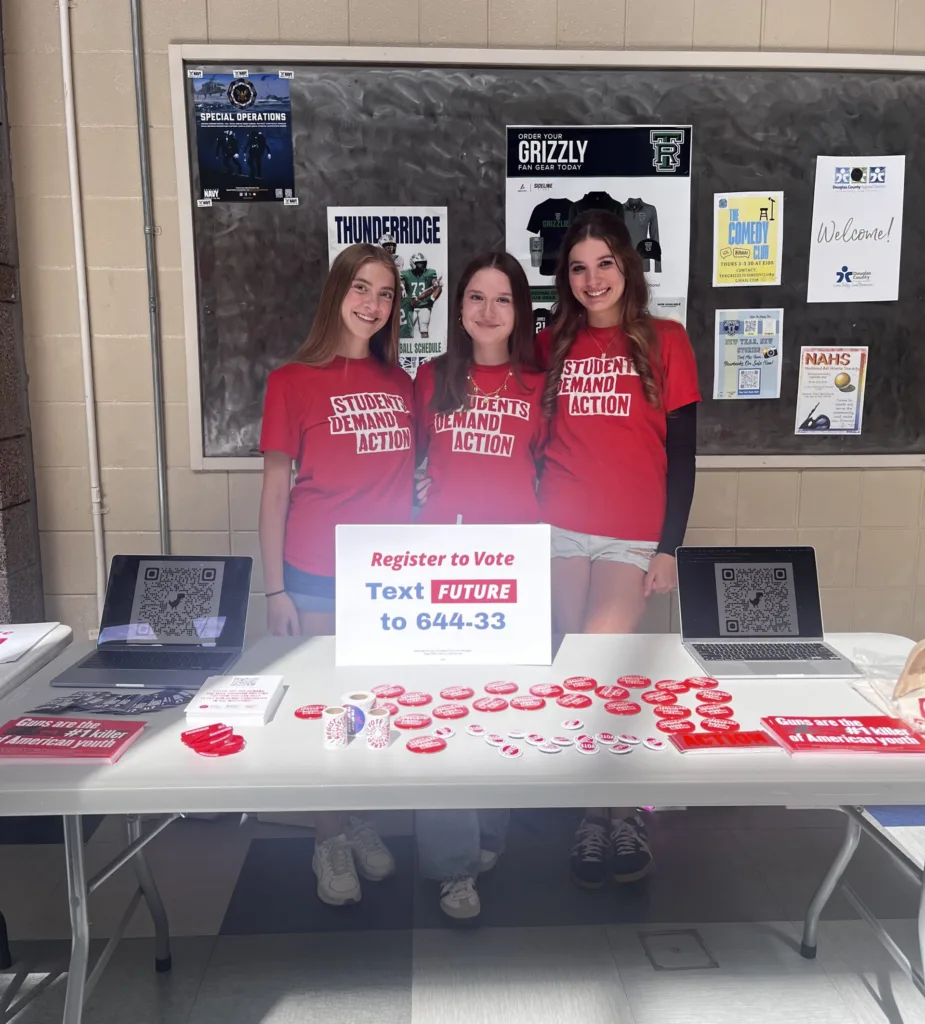
Read: ‘I can’t vote, but I can still have a say in the election.’
What organizing skills did the Electoral Impact Intensive help you learn or grow in?
Communication is something I often struggled with in my day-to-day life. Whether it is making small talk or clarifying details, I struggle to be the one to reach out first. As an Electoral Impact Lead, I bolstered my leadership skills, took on more responsibilities, and grew and adapted as an organizer and person.
— Luke K., Ohio
As someone who does a lot of behind-the-scenes civic work, the Electoral Impact Intensive was an amazing way for me to break out of my comfort zone and interact with voters firsthand. I gained a lot of confidence in engaging in important dialogues with people from various backgrounds about youth-related topics.
— Nia G., California
I learned a lot about how to become involved in local community activities revolving around gun violence prevention, and about how to better communicate with voters. Now, I feel well-rounded in the aspect of voter contact. I also feel more educated on why voting is so important and how to research candidates on the ballot.
— Emma R., North Carolina
As an Electoral Impact Lead, I strengthened my voter outreach and volunteer management skills. I learned how to effectively recruit and train students, organize voter registration and education events, and how to communicate with people who had different perspectives. I received great guidance during my time in the Electoral Impact Intensive, and it’s helped me garner more leadership experience in my own community.
— Alanna E., Arizona
The voter contact work I was most nervous about was the voter rescue phonebank, because I was worried that nobody would pick up or that there would be a bit of hostility. Because my phonebank was so close to school starting, it was tough to find enough people to join me, but I didn’t let that stop me. I got my family to do it with me, and it ended up being really fun! Now that I’ve completed the intensive, I’m really glad I did it. I feel I’ve expanded my electoral knowledge and skills and would 100 percent recommend this program to others.
— Sophie N., Colorado
During one week in particular, a lot of people were passive or rude while I was calling during a phonebank. Experiencing a lot of “nos” before just one yes was a great way to build discipline and to give myself a reason to come back to the work in the future. As I kept going, I was able to talk to people who were very welcoming! In a particularly tumultuous time for public opinion and democratic practices, it has never been more crucial for me to show up and have my voice heard — especially when my future is dictated by those who hear it.
— Zoe B., Colorado
I was most nervous about interacting with others about a political issue like gun violence prevention, especially in our current political climate. But I soon realized that people are a lot more open to talking than I previously thought, especially when the mutual understanding that we all want what we think is best for our country is reached. One key moment I certainly won’t forget from the Electoral Impact Intensive happened while phonebanking. I was calling a woman who listened to me share the full script, but who still said she was unsure about voting. I shared with her how being in school could cause a lot of anxiety for students like me because of the threat of gun violence, and she changed her mind immediately! She said that it was important to vote, and that she should take the time to research Gun Sense Candidates for the election.
— Maya C., Texas
When I was 16, a local group was working to register voters, and I was so disappointed that I was too young to vote. When I finally was able to register at age 18, I broke down in tears. Elections matter to me because they are both the opportunity and responsibility we receive as citizens to change the direction of our future. Through the Electoral Impact Intensive, I gained a lot of confidence in cold-calling people through phonebanks and creating friendly relationships from the beginning of a conversation. So many people that I talked to shared that they had intentions to vote, but didn’t actually have a concrete plan in place; making one together made people feel more empowered to get out and vote!
— Bella B., Illinois
“There truly is no downside to getting involved in voter outreach. You may have some uncomfortable conversations, but you also may have some of the best, most memorable conversations you’ll ever have.”
—Avery S., South Carolina
13 pieces of advice for students who want to get involved in election work but are nervous to start:
- “Don’t let your fears control your actions, and if you really want to make an impact, you will.” — Luke K., Ohio
- “Attend Students Demand Action events hosted by other people first, then host your own events.” — Mya N., Ohio
- “Start with phone banks with friends because it’s an easy way to get involved initially and build confidence.” — Vivienne H., New York
- “Do not be afraid to ask questions or ask for additional support throughout your time in the program.” — Nia G., California
- “Don’t be worried if it feels uncomfortable at first. That’s part of the learning curve!” — Emma R., North Carolina
- “There is so much to learn and experience, and you should take advantage of all opportunities you’re offered!” — Avery S., South Carolina
- “Identify what is driving you to be involved. Get fired up by whatever your reason may be, and channel that anger, passion, and desire into making a change in your community, even if you think it’s not making a huge difference.” — Sam S., Pennsylvania
- “Do not allow your fears to stop you from making a meaningful impact. You cannot create change by being a bystander, so take the first step and get out there!” — Alanna E., Arizona
- “Before you start, it all seems a bit scary and overwhelming. Once you get involved, it becomes so much easier, and it is incredibly fun and rewarding to recognize the change you have the ability to create in your community!” — Sophie N., Colorado
- “Don’t be afraid to branch out and meet new people.” — Zoe B., Colorado
- “Although this work may seem daunting at first, it gets a lot easier once you start, and it all becomes worth it once you realize you are helping change America for good, one person at a time!” — Maya C., Texas
- “Don’t give up, and don’t lose sight of your ultimate goal. It is easy to get brought down by one negative comment, but perspective is what allows us to accomplish our goals and stay motivated.” — Barbara S. L., North Carolina
- “I’d encourage anyone interested in using their voice to simply make that first call: It gets easier after day one.” — Bella B., Illinois